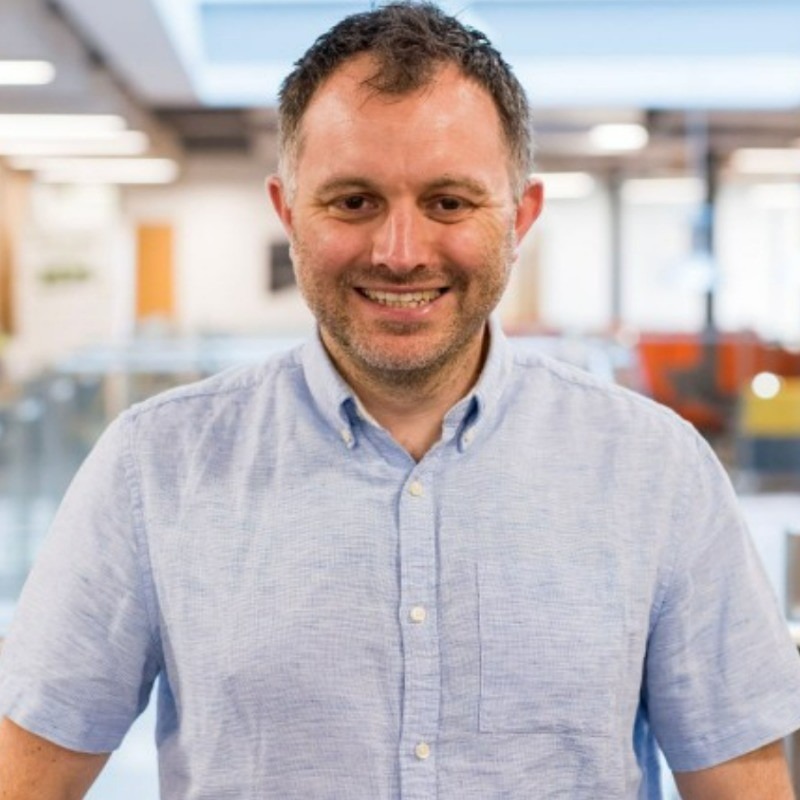
Meeting with a journalist: Paul Marsden
“The speed at which you can do things has had such a big impact on the type of journalism that’s produced now, and it’s hard to emphasise the difference between now and then because it’s just night and day.”
Paul Marsden began his journalism career in the early 2000s when the fast-paced news environment caused by the dawn of the internet was just beginning. Now a published author and senior journalism lecturer, he has witnessed and moulded the news into what it is today.
His passion for journalism developed through his love of sports at an early age: “By the age of about 11, 12 I realised I wasn’t good enough to play professional football. And I think the thing is then I developed a much greater interest in writing about sport.
“I remember when I was really young my Grandma got me to write to a commentator called John Helm. I said I was really interested in being a sports journalist, could you tell me a bit about it?
“I remember being blown away that somebody would write back about stuff like that.”
Following this dream on to university in Lancashire, the changes in journalism were already piquing his interest: “When I was at university the Iraq war happened. That was the first time they ever did the entire news coverage on 24-hour news stations. I just developed a real interest in it.
“The more I learned about journalism, the more I became interested in it.”
Following university, Marsden took up reporter roles in Leek and Blackpool, where he spent his time covering sports and news, and even leading community campaigns in the area and empowering residents to show up for what they believe in.
“When the council were strapped for money, they decided to close a local swimming pool. I ended up doing stories about this everyday and it became this big monster. When they actually got to the council meeting there were so many people outside and they had to come up with loads of proposals to mitigate the risk.
“It was all basically because I’d been writing about it every single day for three months. That was something where I thought, this is something I’ve done that caused this.”
After three years solely reporting, Marsden moved on to other opportunities after being given the opportunity to complete a teaching qualification. The financial crash had hit regional news hard and the job cuts meant the reporters left were stretched thin, doing even longer hours and more work than ever.
“I knew I was probably going to burn out trying to do what I was doing. I think news organisations have gotten a bit more sensible now but back then it was like we still needed to do the exact same work despite the fact we had very few staff.”
Becoming a journalism lecturer in his 20s paved the way for his work as an author. Working with colleagues considerably older, the online modules fell to Marsden as his youth gave him an advantage because as the internet was maturing, so was he.
“When I went into teaching, not many journalists had done much online stuff. It kind of just became my niche really. That’s where the opportunity came to write a book, and I took it from there really.”
Marsden is the author of two books with a focus on digital journalism, including Entrepreneurial Journalism which offers insights into the business side of online media as well as advice on how to produce sustainable, ethical journalism online.
He has also contributed chapters to several Abramis Academic Publishing books on the state of local news in the UK and the future of journalism here.
Now, he is a senior lecturer at Leeds Beckett University continuing to focus on digital journalism and how it is shaping the world of media.
“Technology will continue to change journalism. AI will probably change everybody’s job. But that doesn’t mean those jobs will disappear I don’t think, it’s just going to be different.
“The biggest thing really is to try and go with it rather than fight it.”
Marsden thinks that maintaining the parts of journalism that you are good at is important and that journalists should be evolving with AI because completely handing over news work and letting it write the stories is a “bad idea” that will affect journalist’s careers and spread misinformation.
On the future of journalism, Marsden thinks teaching will continue to evolve quickly as the world of technology does: “Even the people teaching you don’t know exactly because there is no fixed thing, kind of how it was with social media and the internet.”
Lecturers like Marsden with digital expertise will continue pitching online modules that will benefit journalism students enter the media world.
Post a comment